The Duty Of Hplc Evaluation In Peptide Characterization HPLC steps chromatographic pureness by separating the target peptide from associated contaminations and computing main-peak location percent. Mass spectrometry validates molecular identification by inspecting whether the determined mass matches the anticipated peptide mass. For research-grade peptide certification, HPLC and LC-MS/ESI-MS answer different inquiries and ought to be read with each other. Always get in touch with a qualified medical care specialist prior to making any kind of health-related choices. Prax Peptides presumes no obligation for the abuse of any products or info provided on this site. Fragment-level information reinforces identification cases and is frequently consisted of in governing dossiers. Knowing just how to test peptides for pureness ensures the reliability and reproducibility of every research study protocol. This overview explains the three gold-standard analytical approaches-- HPLC, mass spectrometry, and third-party testing-- and how researchers can analyze outcomes to validate that their compounds satisfy research-grade quality requirements. Without orthogonal approaches to identify these microheterogeneities, they multiply in a system (passing away as 'biological irregularity'), decreasing signal-to-noise and inevitably revoking entire data sets. Official HPLC/MS characterization freezes that entropy in position, subjecting each molecule to 2 orthogonal selection pressures (hydrophobicity and mass-to-charge), creating a statistical firewall software around incorrect identity. Normal purity levels range in between 99.0% and 99.7%, straightening with global lab research criteria. These tests validate that peptides from Peptides Laboratory UK have no impurities, deterioration spin-offs, or undesirable fillers-- simply verified, high-purity research product. If a peptide is re-tested after storage anxiety, HPLC can expose whether new impurity peaks have actually appeared or whether the primary peak location has decreased. This links straight with managing subjects such as peptide storage and peptide reconstitution. Impurities in peptide examples can originate from incomplete synthesis, side reactions, or destruction during handling and storage. These impurities-- which might include abbreviated series, deletion peptides, or oxidation products-- can interfere with experimental results in unforeseeable ways. A peptide sample listed at 95% purity consists of 5% unidentified substances that could activate incorrect favorable outcomes, mask real organic effects, or present unwanted variables into very carefully developed experiments. High-performance liquid chromatography (HPLC) testing is an analytical chemistry procedure to divide, detect, and quantify medications and their metabolites within various formulas, automobiles, and biological matrices.
The Function Of Hplc Evaluation In Peptide Characterization
Peptide Distributor At Verified Peptides, every peptide set undertakes rigorous HPLC analysis as component of our quality control. We use independent third-party research laboratories for logical screening of each set to acquire objective HPLC and MS information verifying the peptide's identification, purity, and make-up [3] The HPLC chromatogram should show a tidy account conference our strict pureness criteria (≥ 95% pureness, with the majority of batches in fact surpassing 98%) [4] Any type of batch that drops listed below our pureness criteria or displays unforeseen contamination optimals is re-purified or thrown out.What Different Characterization Approaches Complement Hplc?
Just how much time does an HPLC test take?
Time Required for HPLC EDTA Examination Records + Next Steps

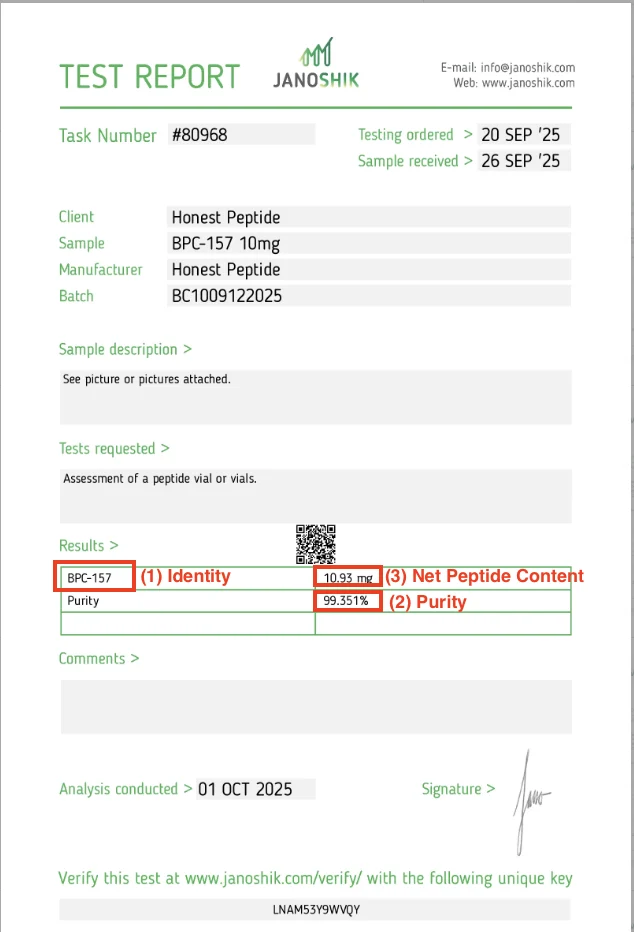
- Without this screening, it can show to be far more challenging to detect the contaminations that might remain in peptide drugs.High-Performance Fluid Chromatography continues to be the gold requirement for peptide pureness analysis since it divides substances based upon their chemical buildings with extraordinary accuracy.Peptides are intricate biological compounds, and the accuracy of your study relies on the precision of the material you utilize.Strong Stage Peptide Synthesis (SPPS) is based on consecutive addition of alpha-amino and side chain safeguarded amino acid residues to an insoluble polymeric support.Hydrophilic communication chromatography (HILIC) and normal-phase chromatography are also ideal for separating polar substances, with HILIC being the preferred method.